It’s like being on one long holiday. Almost every day, I can get to walk in the unspoiled countryside, the green hills, and dales as far as the eye can see. Archaeological treasures abound, human endeavour dating back 6,000 years. I was assured that today’s four mile walk would be one of great interest. I would see a “new section” of the former Cromford and High Peak Railway and some spectacular stone built embankments which appear in as good a condition as when constructed in the mid 1820s. I was thrilled.
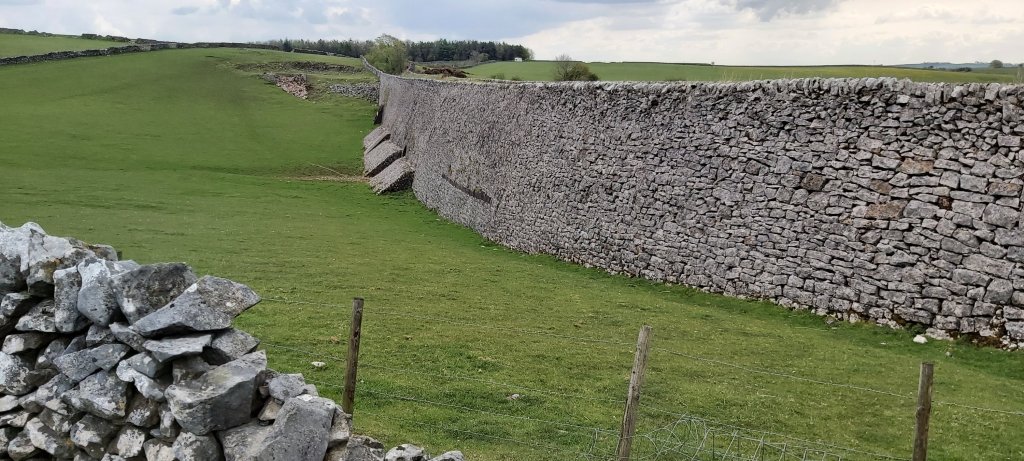
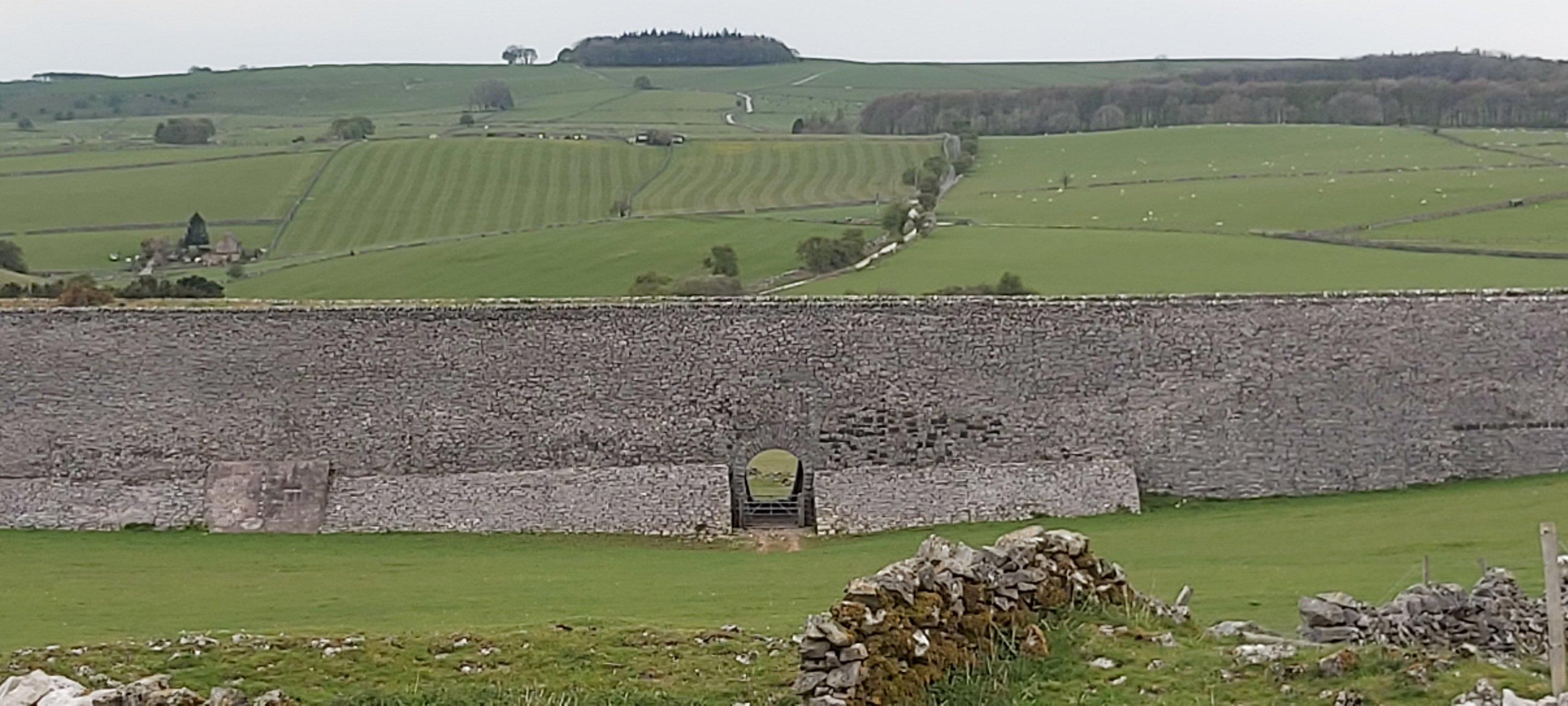
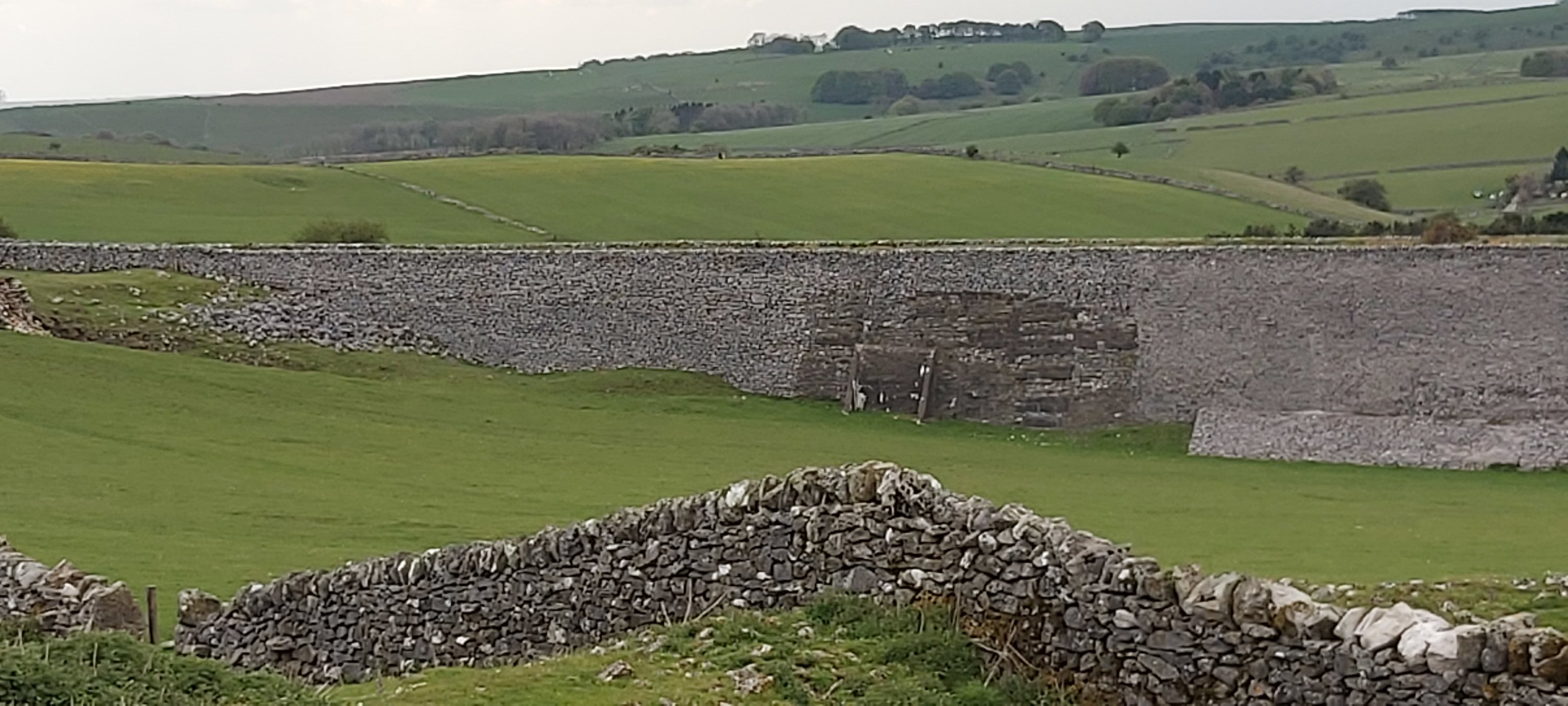
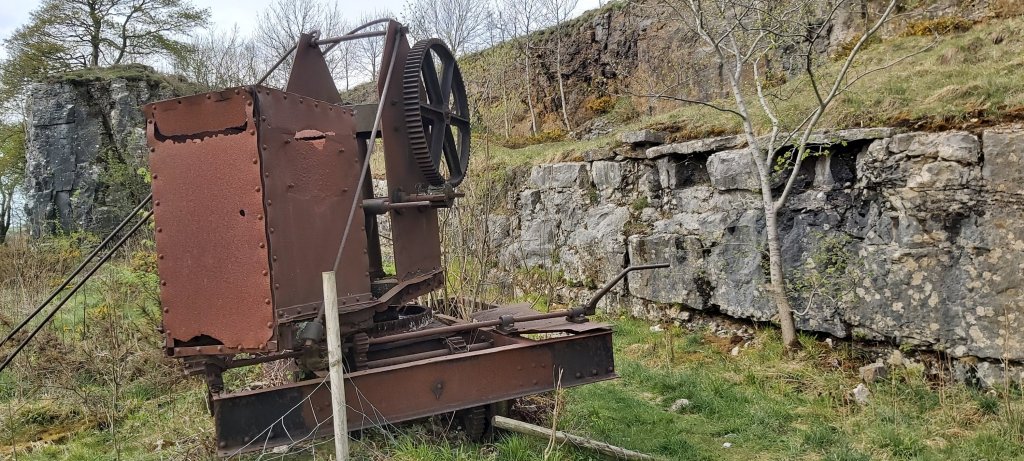
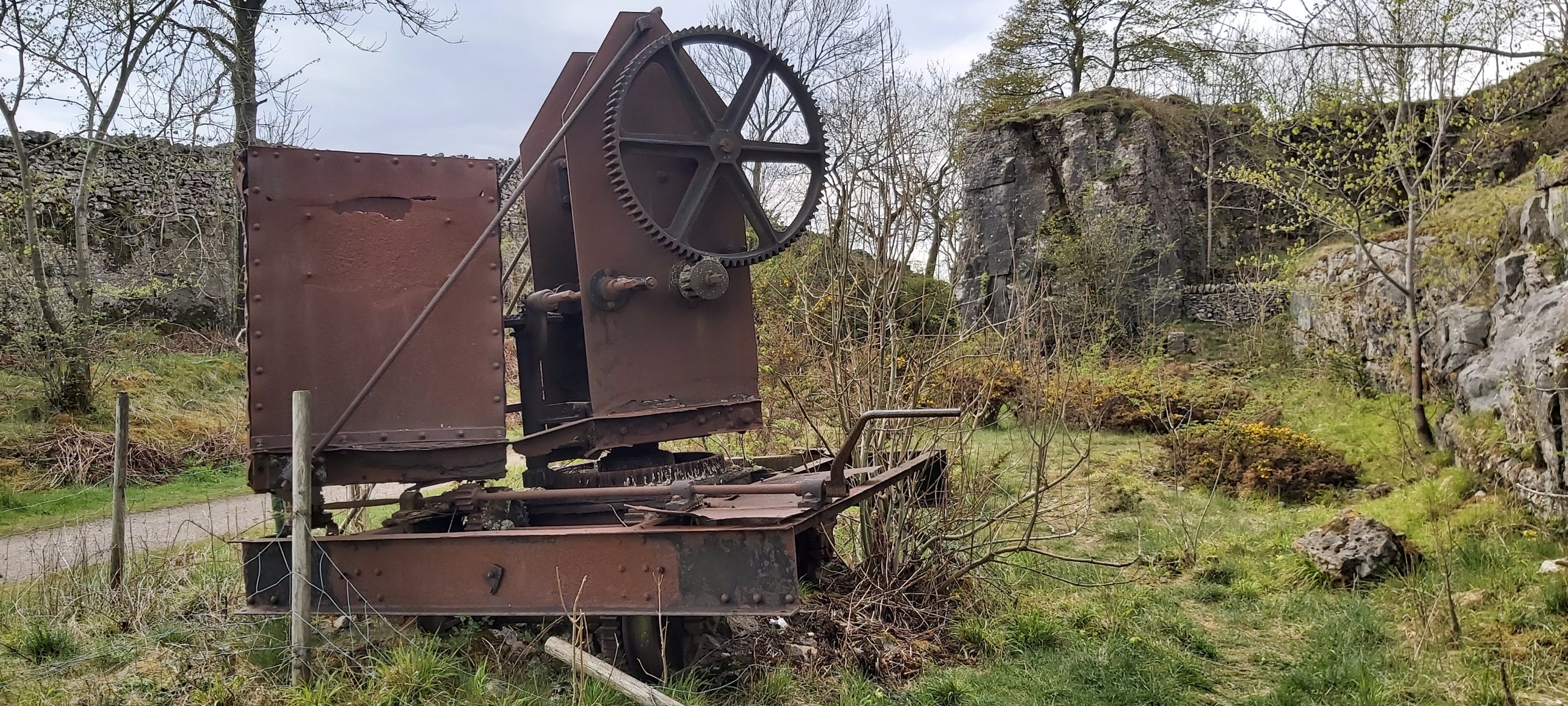
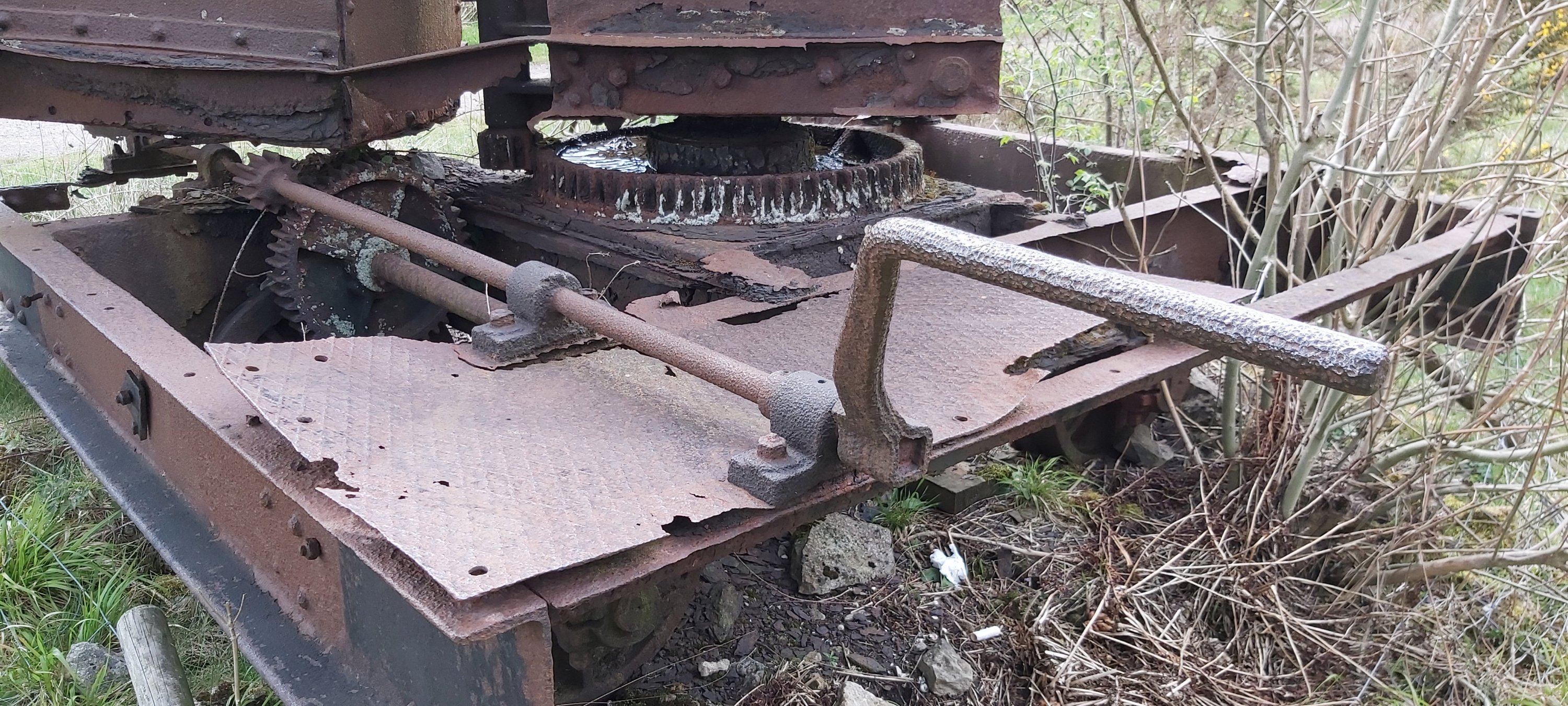
We left the car near the hamlet of Pike Hall, around 12 miles south of Buxton, and within a few steps, we were on the High Peak trail which we would follow as far as Minninglow Quarry, where an unrestored hand operated crane rusts where it was abandoned many decades ago.
09.43hrs, Friday 14th May, 2021
Surely, I can find out more about this rusting relic, which still stands on a tiny piece of narrow gauge quarry railway at Minninglow. There’s a debate here; should it be restored to museum condition, or treated with some kind of corrosion retardant, or, merely left as is, to disintegrate eventually to something unrecognisable? It is certainly worthy of appropriate conservation.
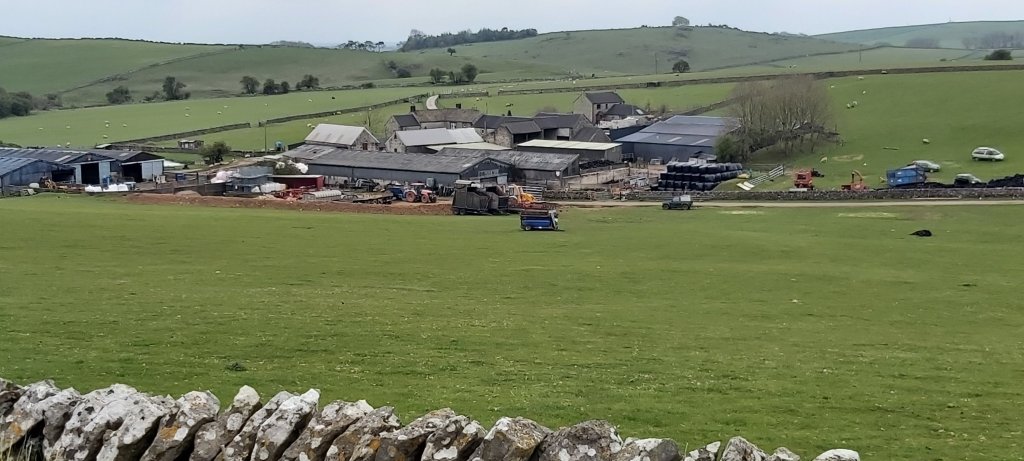
Before arriving at Minninglow Quarry, looking to the right, one sees what might at first to appear to be a typical, but unremarkable Derbyshire farm. Thus it was, until 1978, when the proprietor wished to construct an additional barn. The diggers arrived, and skeletal human remains were unearthed. The Police were called, and a pathologist determined that the bones were some 2,000 years old, of Roman origin. I believe the publication, “Roystone Grange – 6,000 years of a Peakland Landscape”, by Richard Hodges, unravels this ancient mystery. Close by, atop a not too challenging climb, trees circle a significant Neolithic burial site, which dates to around 2,000 years before God revealed Himself to Abraham c2100 B.C. (The Bible, N.I.V.). When standing there, surrounded by a circle of mature trees, looking at stone grave coverings fashioned by humans six millennia previously, I find no words adequate to describe such an experience.
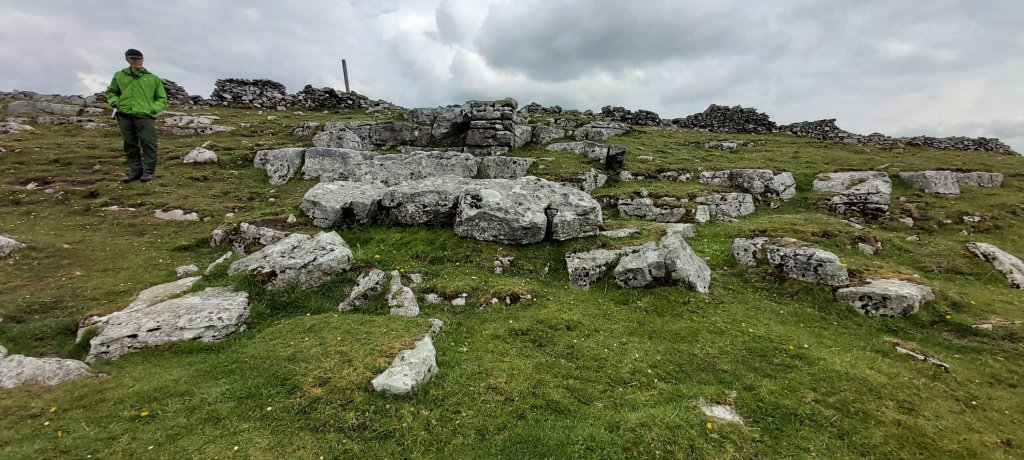
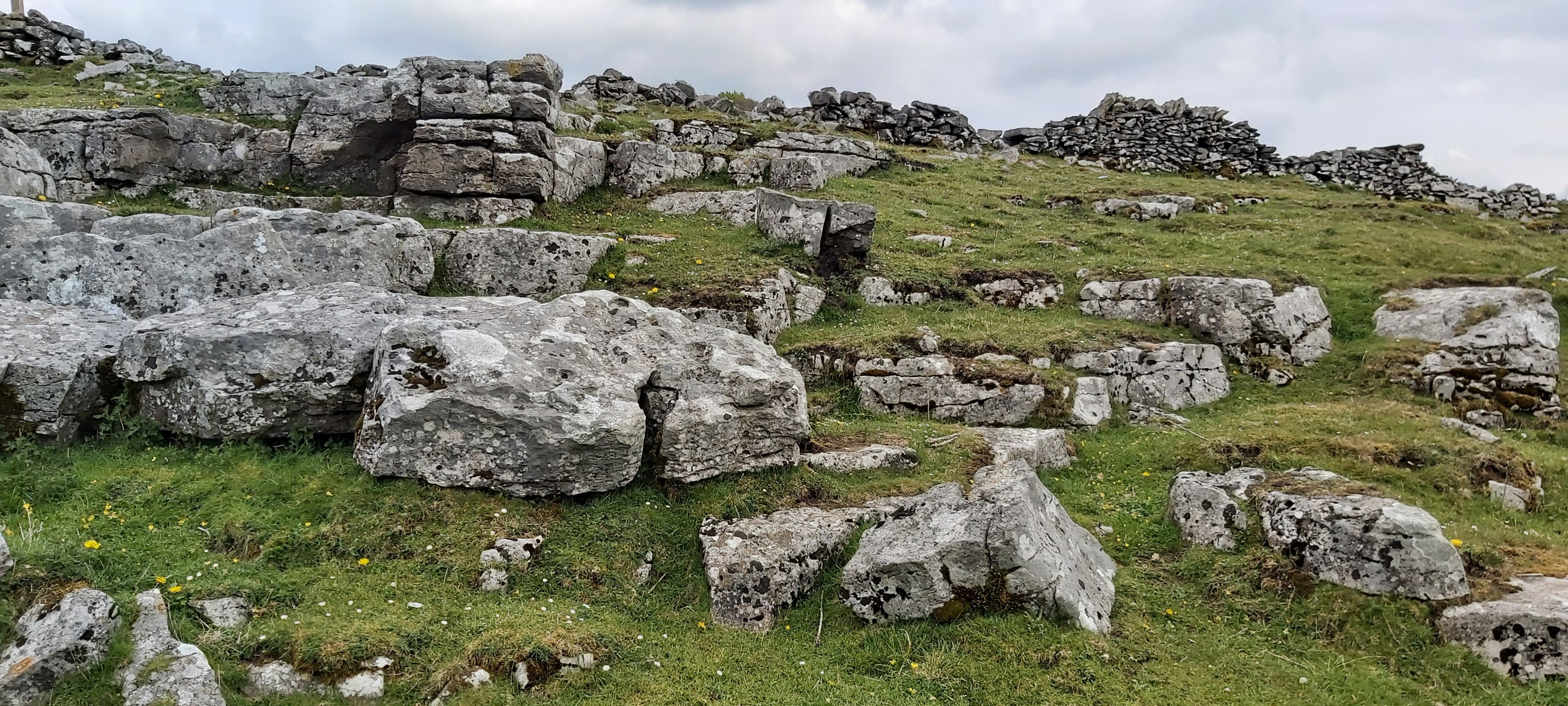
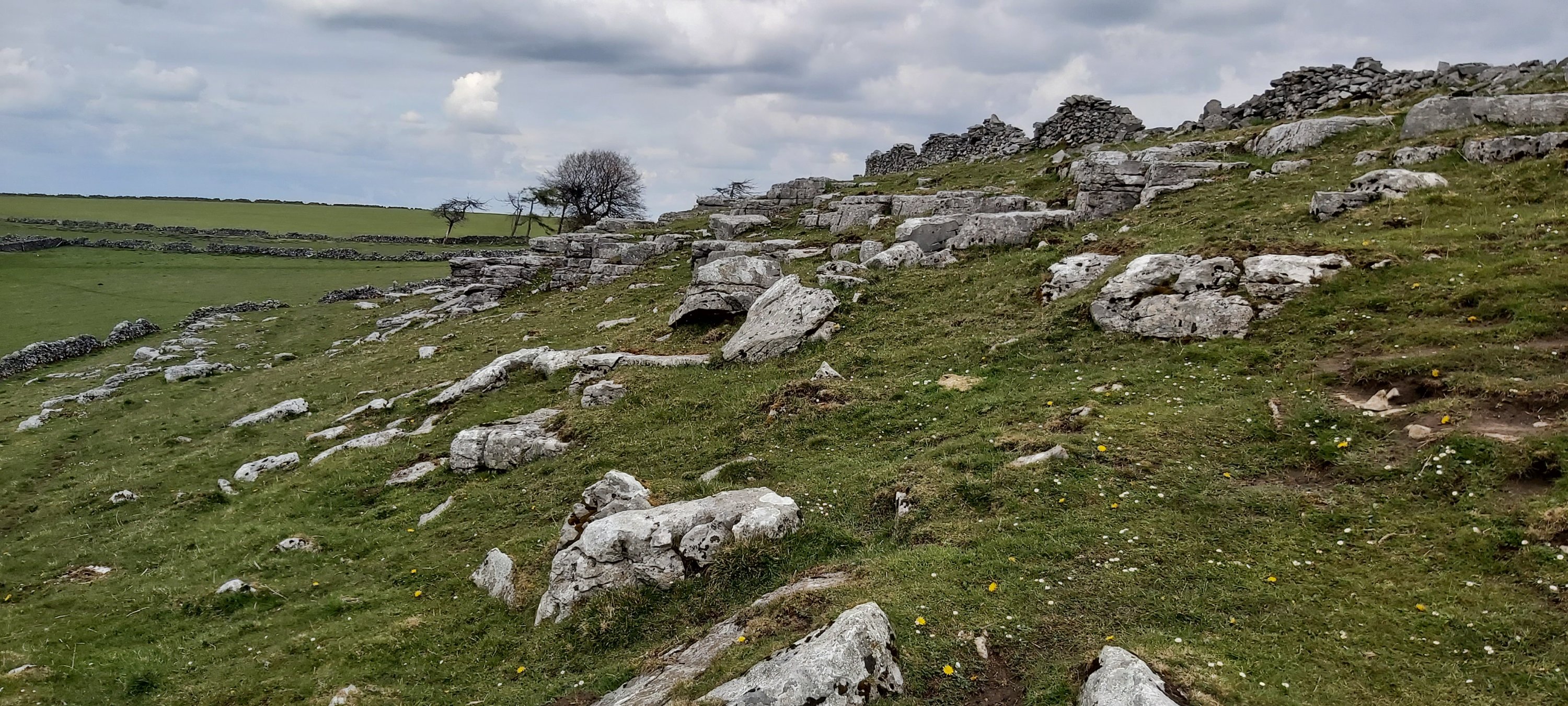
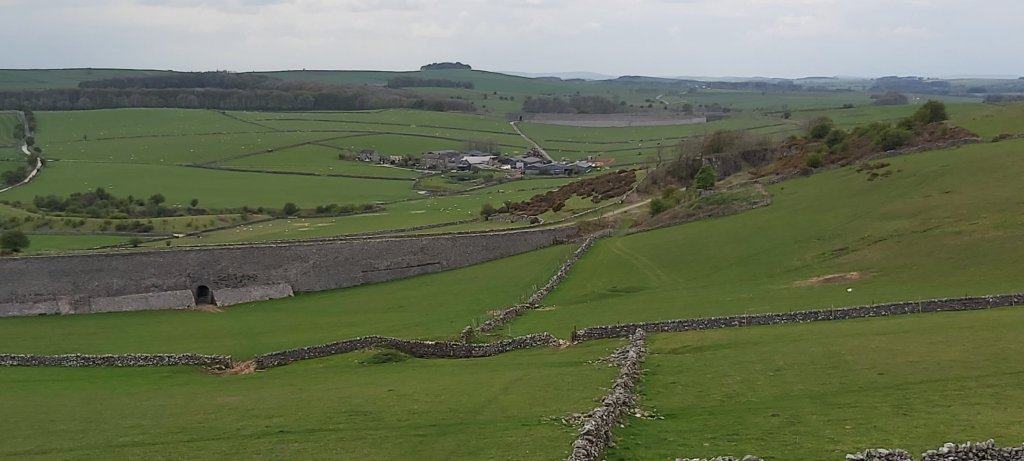
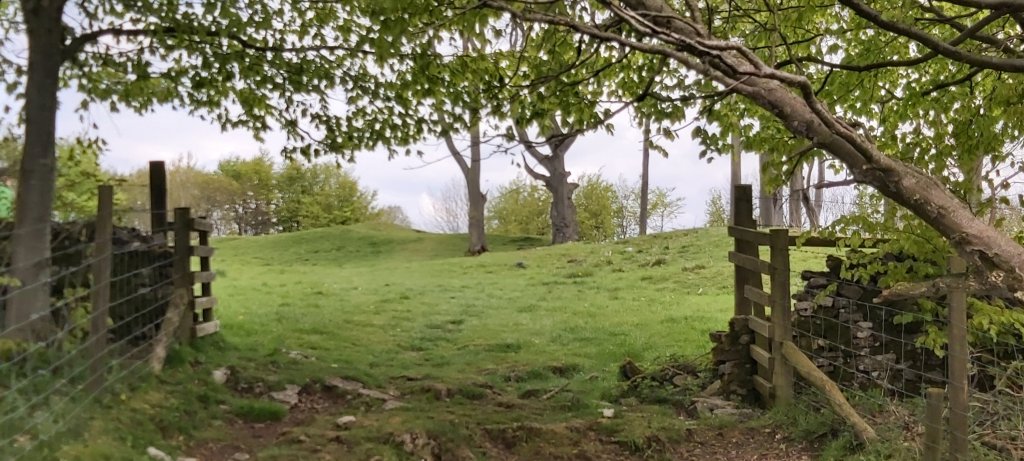
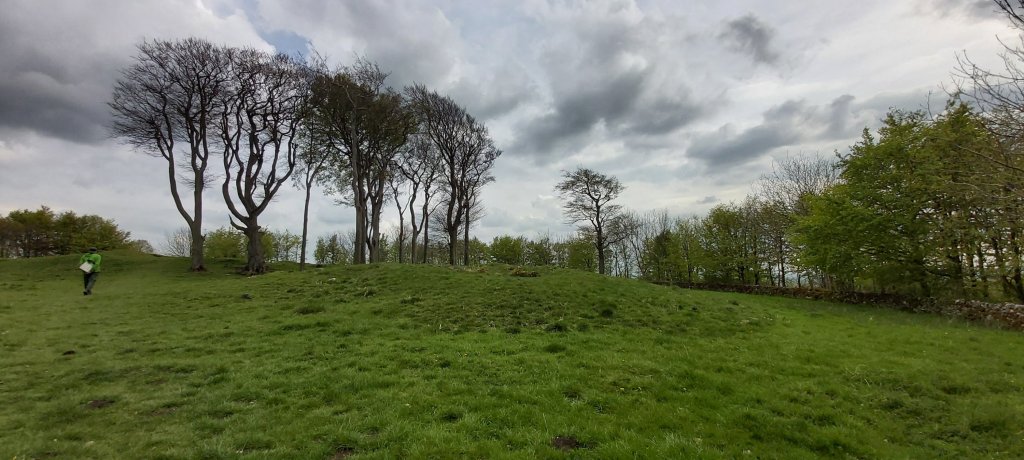
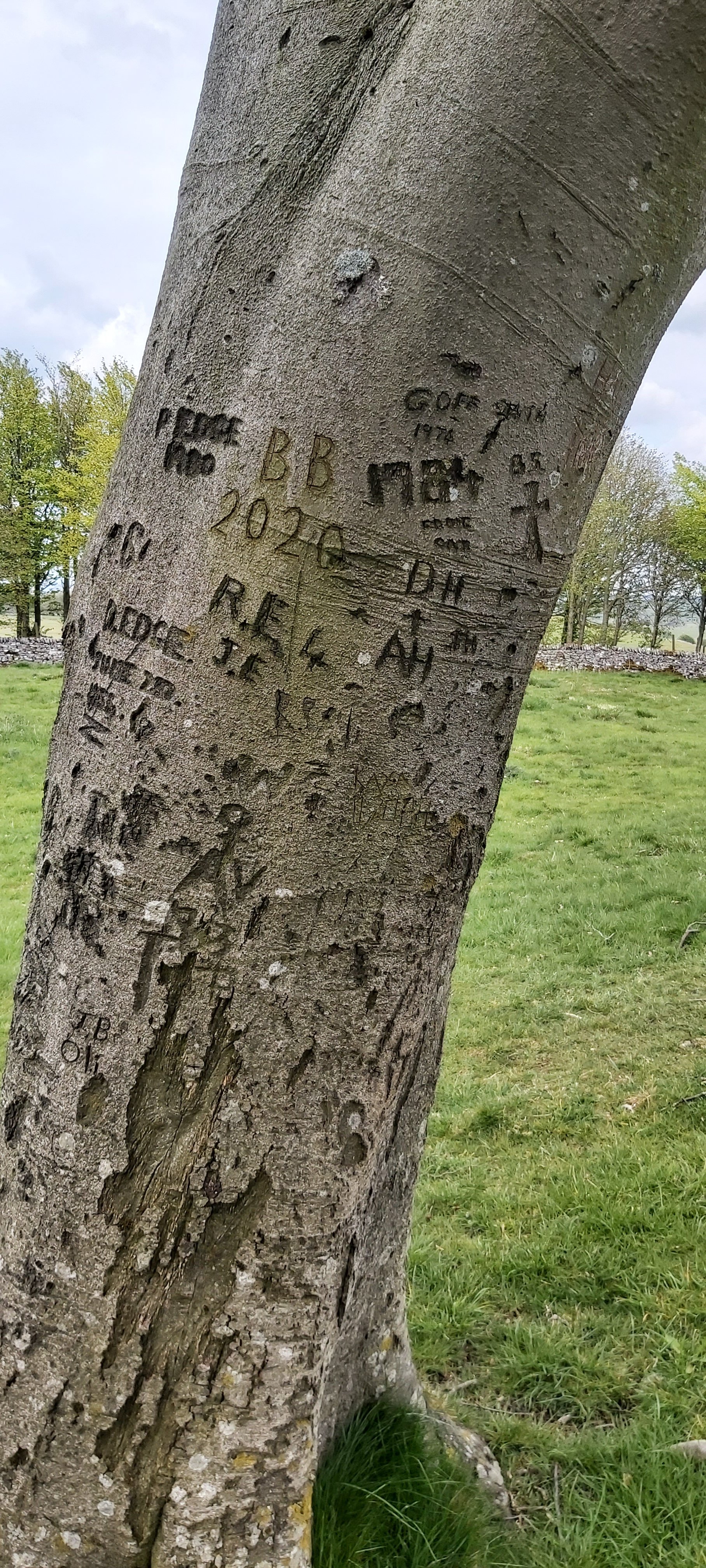
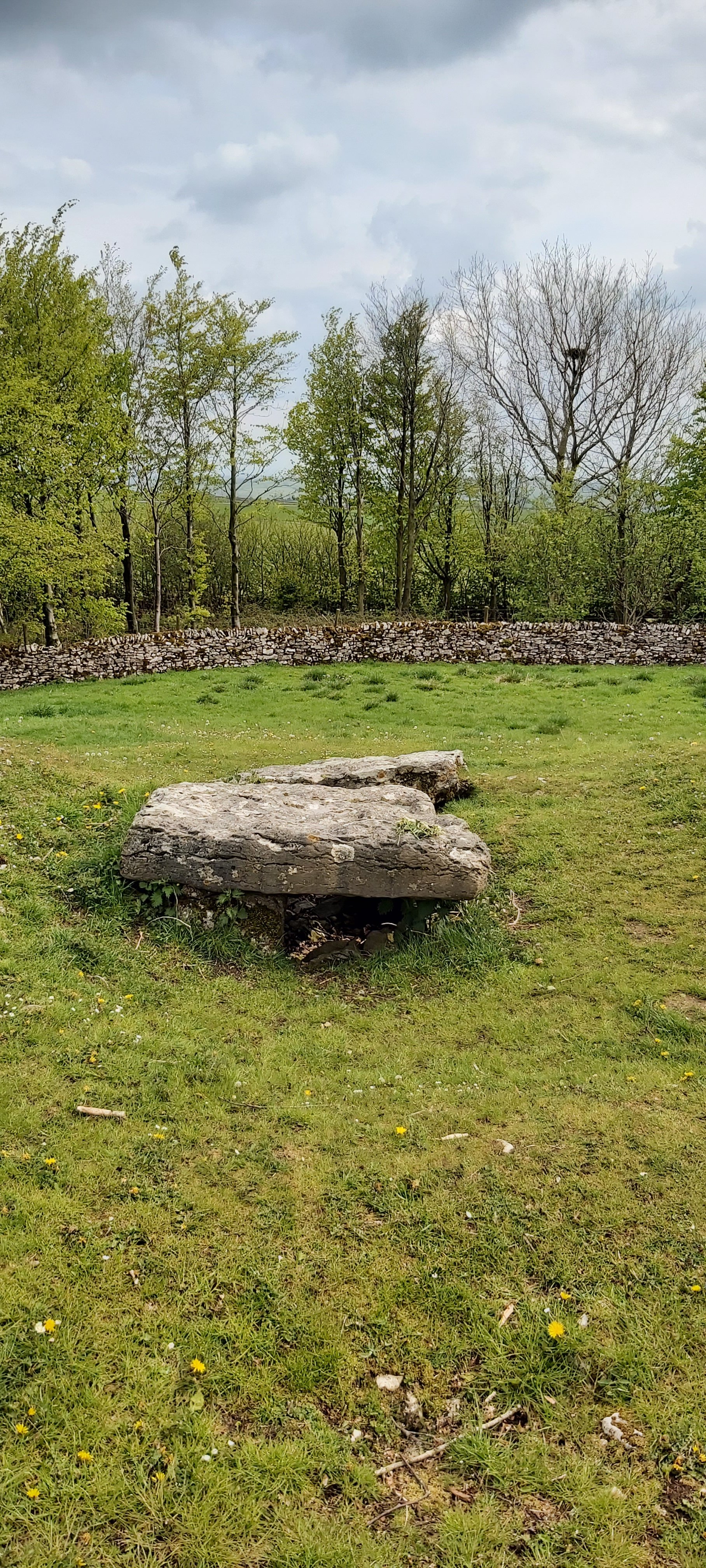
In the first approximately two miles, we had walked the re-purposed track bed of one of the first railways in the world (opened 1831), gazed upon what had become a Roman settlement, established because of the plenteous reserves of lead to be exploited, and, evidence of a civilisation 4,000 years older than that. We had left the old railway line to venture up to the Neolithic site, rejoining it later after descending the hill by an alternative route. The remaining two miles were along the former railway for a short while, a well established farm track, and narrow country lanes. This was rather like being on a family holiday in the 1950s.
In the evening, I attended a celebration of Holy Communion for Ascension Day, I think, for the first time. This was at St. Mary’s on Dale Road, an attractive church built during the early reign of George V, replacing one built earlier which I assume had fallen into disrepair.
In the first 14 days of May, I had achieved half my challenge of 300,000 steps in aid of Christian Aid, by the end of the month. And, according to the scales, I have not lost any further weight yet!
With all good wishes, and many thanks for reading, David, 1051hrs, 14/5/21.
 David's Cruise